Belgrade
At the meeting of the Sava and the Danube, Belgrade grew around a fortified ridge. The name means White City. Roman Singidunum occupied this strategic site. In the early fifteenth century, Despot Stefan Lazarević made Belgrade his capital. The fortress was repeatedly rebuilt as Ottoman and Habsburg powers contested the city. Today the capital’s Upper and Lower Towns and Kalemegdan Park preserve this layered landscape.
A city at the confluence
The fortified ridge above the Sava and Danube held the Roman stronghold of Singidunum. In the early fifteenth century Despot Stefan Lazarević made Belgrade his capital and developed the Upper and Lower Towns. The Ottoman capture of 1521 began another long chapter in its history.
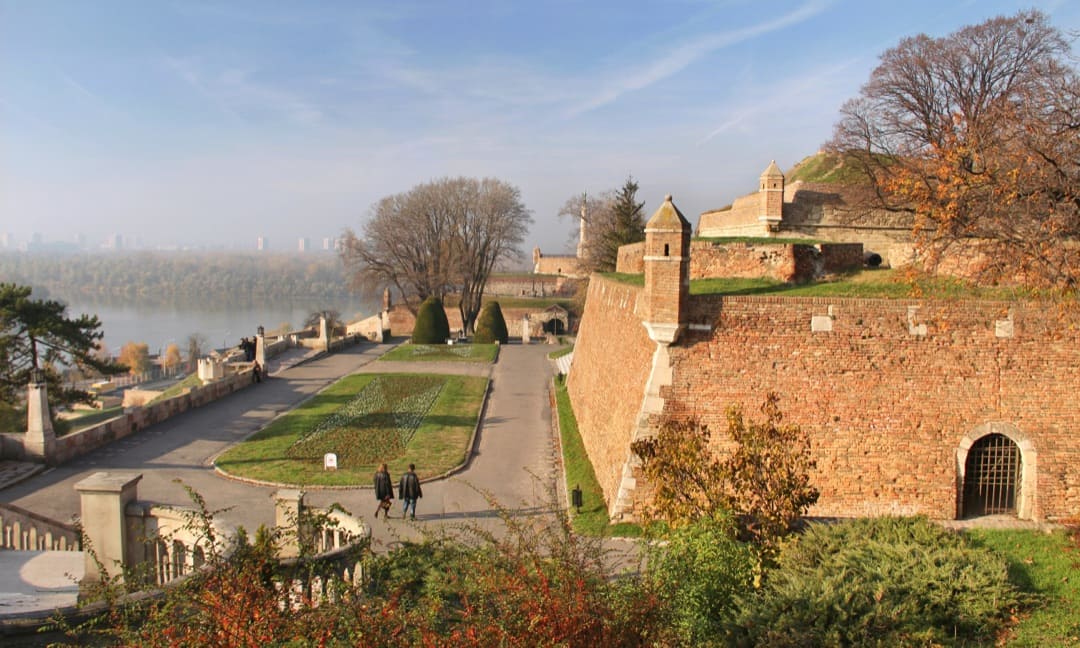
Ottoman and Habsburg authorities rebuilt the defenses as control shifted. In 1867 the Ottoman commander handed the keys to Prince Mihailo Obrenović. Kalemegdan now links the old defenses with the city streets and parks around them.
Fortress and old centre
From the Upper Town, look down to the former riverfront defenses. The Victor monument faces the confluence. Knez Mihailova leads from Kalemegdan back into the commercial centre and toward Republic Square.
Museums and memory
The National Museum offers a long view of the region through archaeology and art. The Museum of Yugoslavia explores the twentieth century through collections from two predecessor institutions. The Church of Saint Sava is a separate visit on the Vračar plateau.
People who shaped Belgrade
Stefan Lazarević shaped the medieval capital. Prince Mihailo is remembered on Republic Square and in the name of the pedestrian street. Sculptor Ivan Meštrović designed the Victor, which was installed at the fortress in 1928.
Two walks by the rivers
Follow the fortress walk from Kalemegdan, then continue toward Republic Square. For a different riverside landscape, set aside a separate visit to Zemun, combining the Danube quay with the uphill streets of Gardoš.